Product Overview
Stainless steel earns its place where a surface has to survive years of cleaning and still read as the material it was on day one. These sheets are cold-rolled flat, finished on the face, and then cut to your drawing, so a run of wall panels or a set of lift linings closes up without packing out joints on site.
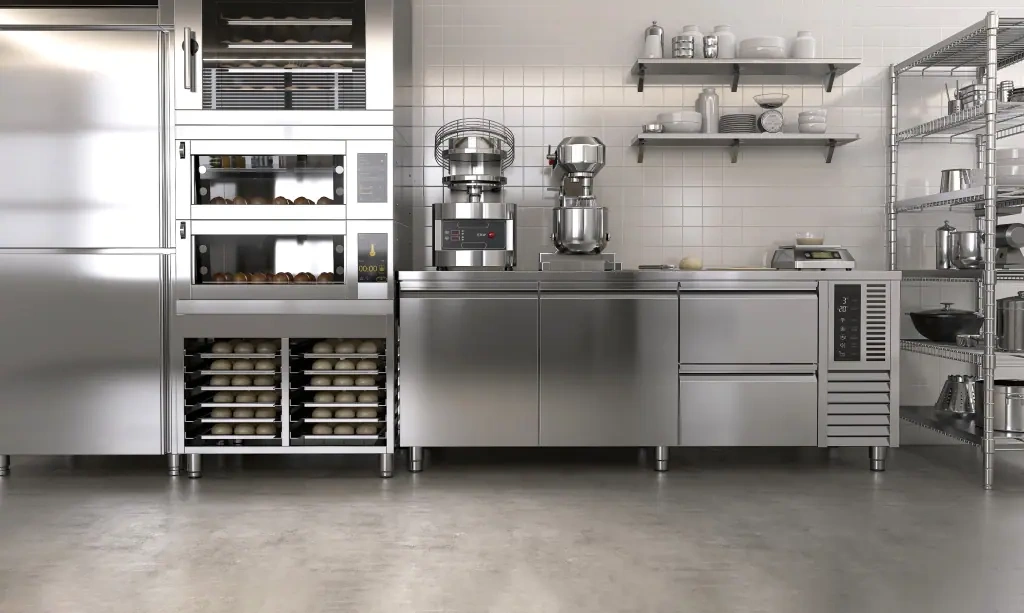
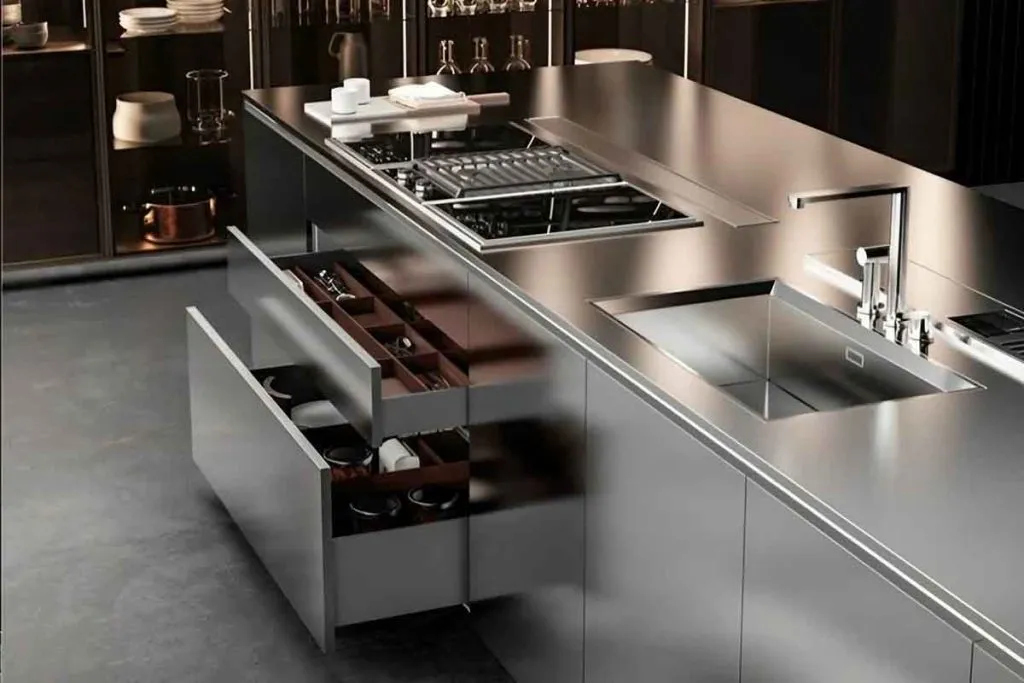
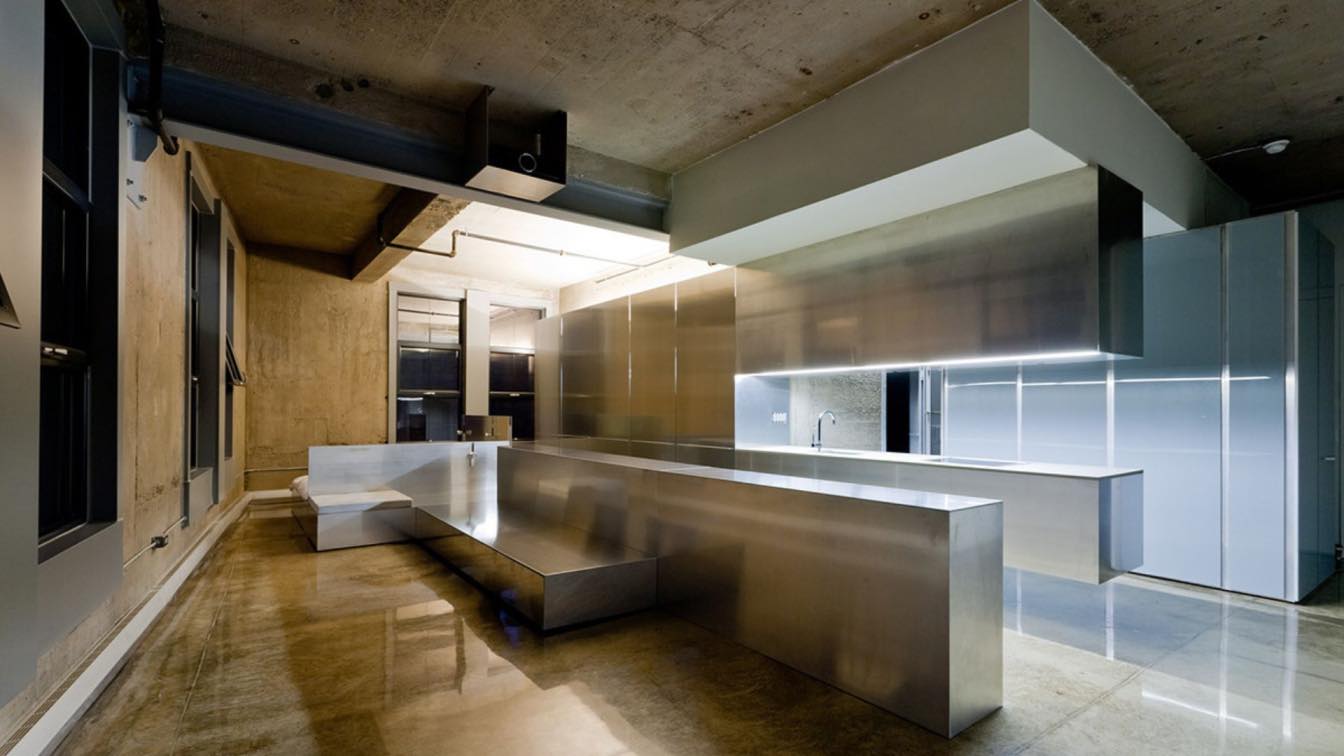
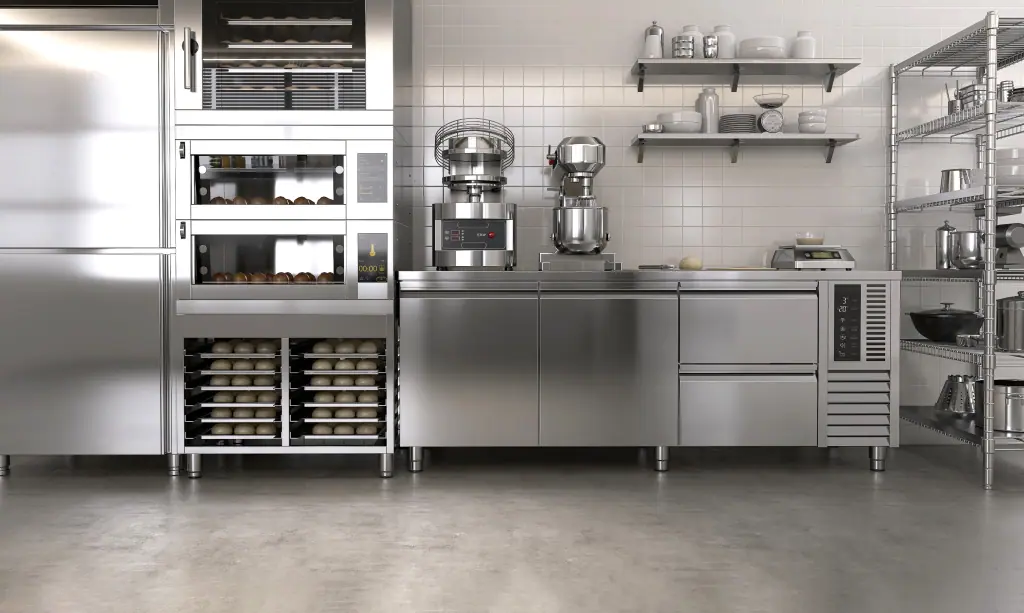
Architects, interior designers and fit-out contractors write them into hotel lobbies, office reception walls, lift cars and service corridors. Joinery and fabrication shops keep the same stock for custom metal furniture — cabinet fronts, table tops and island cladding that would otherwise be laminate, timber or a painted finish. Kitchens, medical rooms and other commercial spaces use them because the face wipes clean and does not hold stains or odour the way a porous material does.
Where a wall schedule was written around commercial wallcoverings, a stainless panel gives the same wall line a rigid, cleanable face that will not tear, lift at a seam or soak up a spill. That is also why these panels turn up in lift cars and service corridors, where the wall is touched, trolleyed and wiped every day.
They arrive as flat panels rather than profiled metal siding sheets, which is what lets a lift lining, a cabinet door or a reception band take a crisp, tight edge and a joint line you can read from across the room. Finish usually comes first: brushed for a long corridor, hairline for a calm elevation, mirror where the metal is meant to be noticed. Gauge, grade and cut-outs follow the detail you send us.
Material & Build
Cold rolling sets the character of the sheet. It keeps every panel flat and holds thickness and dimensional accuracy steady from one piece to the next — the detail that decides whether a long cladding run or a run of lift panels meets the drawing on site, or needs shimming to hide a variation.
The range runs from 0.6 mm to 3.0 mm. Lighter gauges suit panels bonded to a flat, solid substrate that never take a direct knock; heavier gauges carry themselves across a frame and absorb the wear of a work surface or a door front. Because thickness is held consistently, one drawing can be set out and repeated across an entire elevation.
The surface is polished and finished before cutting. From there, metal sheets can be laser-cut, punched or formed during fabrication, so openings for sockets, signage, speakers and fixings are made to your drawing rather than opened up on site with a jigsaw — which is where a finished face usually picks up its first marks, and where a cut edge stops being straight.
A peel-off protective layer stays on the visible face until the panel is fixed. It resists staining and corrosion in daily use and carries the surface through packing, shipping and site handling; the last few metres between the crate and the wall are where most marks appear on a decorative panel.
Base material is stainless steel, with 304 as the standard grade and 316 available where a project specifies it. Both take the full finish range and both hold the same thickness tolerance, so changing grade for a wet area or a medical room does not force a change in how the panels are set out.
Surface Finishes
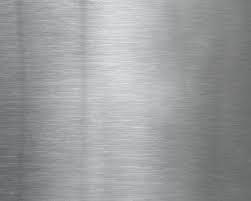
- Brushed — a fine directional grain that softens glare and hides everyday handling marks along long runs; it is the usual choice for lift linings, column cladding and partition panels, and the practical choice for custom commercial furniture fronts where hands and trolleys meet the surface.
- Hairline — a tighter, straighter grain than brushed, chosen where a large elevation has to read calm and uniform and the joint lines should disappear into the surface.
- Mirror — polished to a reflective face for reception walls, lift door surrounds and feature bands; it shows fingerprints and transit marks more readily than the other finishes, so plan how the wall will be cleaned before it goes into a busy lobby.
- Embossed — a pattern pressed into the sheet, catching light and giving a plain wall depth without a printed overlay; the texture also breaks up light scuffs.
- Etched — artwork worked into the surface, so decorative metal sheets can carry a motif, a wayfinding mark or a logo in the metal itself rather than on top of it.
- Combining finishes — one scheme can pair brushed panels with mirror bands or etched insets, or mix metal with commercial wallcoverings on the same elevation, provided every sheet on the job is approved against the same physical reference.
- What to check before production — hold the panel in daylight and again under the interior lighting that will actually be installed; a metallic surface reads warmer or cooler with the light, and a grain that looks right on a sample board can flatten under a cool downlight.
- Grain direction — keep the grain running the same way across a run; panels fixed against the direction read as a different tone under raking light, even when they came off the same sheet.
Fixing, Handling & Care
- Adhesive bonding — needs a flat, dry, sealed and dust-free substrate, full-contact adhesive and no fixing heads showing on the face. Where the wall was prepared for commercial wallcoverings, the surface is often already flat and sealed; check it is clean and sound before the panel goes on, and that nothing is flaking behind it.
- Mechanical fixing — set rivets, screws or secret fixings on the panel grid so they read as part of the design; the method suits panels that must come off again for service access, or panels that carry their own weight and need a physical anchor, which is common on custom commercial furniture fronts.
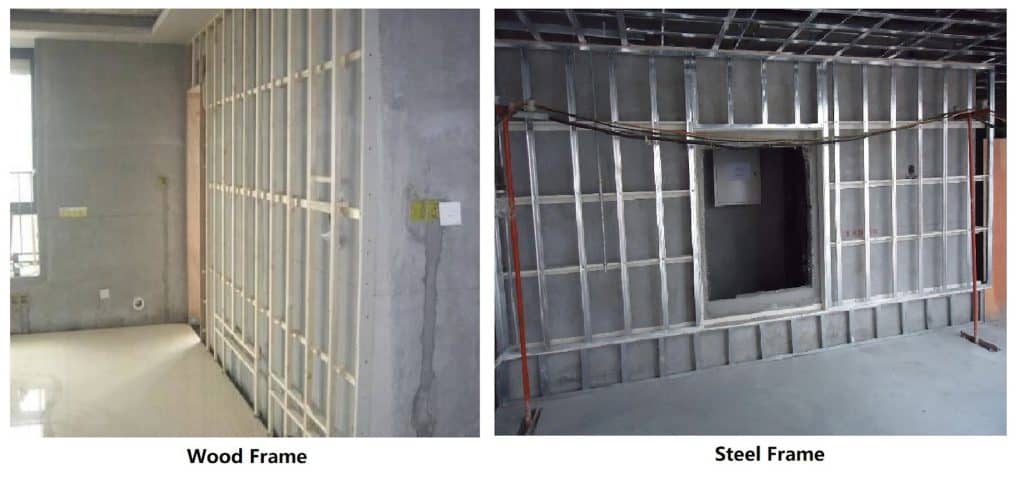
- Frame system — a subframe or dry-hung system takes over where the wall is out of tolerance or the panels need to float for movement and ventilation.
- Set out before you cut — mark the panel grid and the joint width first. Resetting a panel after a run is complete costs far more than checking alignment mid-run.
- Protect the face until the end — leave the peel-off film on while cutting, drilling and fixing, and strip it panel by panel as the run is finished rather than all at once at the end of the day.
- Cleaning — a soft damp cloth and a dry wipe afterwards is enough for daily marks. Avoid abrasive pads, wire wool and chloride-heavy cleaners, and rinse off any acidic or salty residue that lands on the surface.
- Different finishes, different care — mirror and hairline show every fingerprint and water mark and need a routine; brushed, embossed and etched decorative metal sheets forgive far more, because the texture and grain break up the marks.
- What actually damages a panel — rarely the air. More often it is grit trapped under a cloth, adhesive residue left on the face, and a blade dragged along the surface during fitting.
Specifications
| Item | Description |
|---|
| Base Material | Stainless Steel (304 / 316 optional) |
| Standard Dimensions | 1220×2440 mm, 1219×2438 mm (custom sizes available) |
| Thickness Range | 0.6–3.0 mm |
| Surface Finish | Brushed, Mirror, Hairline, Embossed, Etched |
| Manufacturing Process | Cold rolling, Polishing, Laser cutting |
| Fire Rating | Class A (non-combustible) |
| Environmental Rating | Recyclable, Low VOC |
| Installation Methods | Adhesive bonding, Mechanical fixing, Frame system |
| Maintenance | Wipe clean; resistant to stains and corrosion |
| Typical Applications | Interior wall panels, Elevators, Kitchens, Medical & Commercial spaces |
Custom Sizing & Fabrication
- Start from the setting-out drawing. Send panel sizes, the joint positions you want and every opening — sockets, speakers, signage, grilles and fixing points. The same file works whether the job is a lift car lining, a wall run or a batch of custom metal furniture fronts.
- Agree grade and finish against one reference. Decide 304 or 316, then check the finish on a physical panel in daylight and again under the interior light that will be installed.
- Confirm the panel break. Decide how the elevation divides into individual metal sheets, and which panels are the most visible, so the prominent faces can come from the same rolling run.
- Let fabrication make the openings. Laser cutting, punching and forming happen during manufacture, so cut-outs, returns and folded trims come off the same flat stock and the visible face is not re-handled on site.
- Ask for panels marked to position. Numbering each panel to the elevation and packing in installation sequence lets the site team work from the crate rather than from a printed plan.
- Hold the specification for later phases. A project that runs in stages can keep the same grade, finish and grain direction on file, so the custom commercial furniture, wall panels or trims ordered for phase two match phase one.
- Cut accents from the same file. Where a scheme pairs stainless with brass or aluminium, set both out from one drawing so reveals, joint widths and panel modules line up across the materials.
Ordering & Delivery
- Send the drawing set and the finish you want — elevations, panel sizes, openings and fixing points, plus the grade you intend to use.
- Approve the finish on a physical panel before production. Check it in daylight and under the installed interior lighting, and ask your sales contact about sample availability before the order is released.
- Confirm the pack. A finished decorative face is protected differently from plain metal siding sheets — ask how the film is applied, how panels are separated in the crate and how the protection is removed on site.
- Agree the delivery schedule and shipping terms with your sales contact. Lead time, freight and crating depend on destination, volume and panel size, so they are confirmed per order rather than assumed.
- Settle documentation early. Tell us what your main contractor or client needs alongside the cut metal sheets — order details, packing lists and product information for the submittal — so it can be prepared with the shipment.
- Plan the last leg. Check site access, where crates will be stored and how panels will be moved to the floor; a marked decorative face stays clean far longer if it remains in its packing until the room is ready.
Supply Chain & Delivery Assurance
Guangzhou Chuxin Import & Export works as the coordination point between your project and the suppliers who make it. We consolidate the categories a fit-out needs into a single order, match each specification to suppliers in our global procurement network, and follow it through sampling, pre-shipment inspection, export documentation and cross-border delivery to the Americas, Europe, Southeast Asia and the Middle East. Custom sizing and OEM coordination are arranged around your drawings and programme, and one contact tracks the order from approved sample to arrival, so a multi-category package moves on one schedule.
FAQ
Should I specify 304 or 316 stainless steel?
304 covers most interior work — wall panels, lift linings, splashbacks and cabinet fronts. Go to 316 where the surface meets chlorides: coastal and pool-side air, medical and food rooms cleaned with chlorine-based agents, or any area where strong chemical cleaners are part of the routine. Tell us what the wall will be cleaned with and we will advise on grade before the order is released.
What thickness suits a wall panel compared with a work surface?
The range runs from 0.6 mm to 3.0 mm. A panel bonded to a flat, solid wall can sit at the lighter end, because the substrate carries it and nothing hits it directly. A work surface, a cabinet front that takes knocks, or a panel spanning between fixings needs more gauge and backing. For custom metal furniture such as a table top or an island, tell us the span and what will be placed on it and we will match the sheet to the detail.
Can you supply custom sizes for a specific project?
Yes. Standard sheets are 1220 × 2440 mm and 1219 × 2438 mm, which cover most wall and lift work. Anything outside that — a panel sized to an elevation, a lift car lining, a folded trim — is produced to your drawing, with the openings cut at the same time. Send the setting-out drawing with panel sizes and joint positions and the sheet schedule is confirmed against it.
Can you emboss or etch our own pattern or logo?
Yes. Etching works from line artwork and cuts the motif into the surface; embossing presses a repeat pattern into the sheet. Both are produced during fabrication, so decorative metal sheets carry the design in the metal rather than as a printed overlay, and it will not wear off with cleaning. Send vector artwork or a clean line drawing, and ask your sales contact about seeing a trial panel before the full run.
Can these sheets be used outdoors on a façade?
We supply them mainly for interior work — wall panels, lift linings, kitchens and commercial fit-outs. Exterior runs and profiled metal siding sheets involve different fixing, drainage and movement detailing, and the finish has to be selected for weather exposure. If your project includes an outside application, raise it early so the specification can be reviewed before anything is fixed.
Will a later production run match the first delivery?
Grade, finish and grain direction can be held on file so a second phase is produced to the same specification. Expect a slight difference in tone between rolling runs — that is normal for a metal surface, and it is why panels are usually laid out and checked together before fixing. Send the original specification or a retained offcut when you reorder.