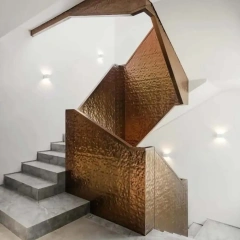
Product Overview
Pure copper sheet is a decorative surface with a working life rather than a fixed appearance. It arrives flat and cold-rolled, finished in one of four surfaces — natural, brushed, patina or oxidized — and from there it keeps responding to the air around it. Much of what a copper sheets manufacturer controls happens long before the sheet reaches site: the purity of the metal, the accuracy of the rolling, and the chemical work that sets a patina into the surface instead of printing a colour onto it. That behaviour is why the material turns up on reception walls, bar fronts, ceiling rafts, lift linings and furniture doors, where a surface should read as metal rather than as a picture of metal. The questions a project asks are always the same — how the surface will age, how the panels will be fixed, and whether the next delivery will match the sample. This range of decorative metal sheets is put together so those answers are settled before the order is released.
Material Performance
- Corrosion resistance sits in the metal. Copper builds its own protective oxide layer as it weathers, so there is no coating film to chip at a cut edge or around a fixing. Coastal air, humid rooms and heavy hand contact do not expose a bare substrate the way a scratched coating does.
- Consistency across a batch is what buyers actually test. People ordering wholesale copper sheets judge the delivery rather than the sample board: thickness held steady, panels flat, tone reading the same from the first sheet to the last. Cold rolling is what makes that repeatable, and heavier or textured formats may be hot-rolled or pressed instead.
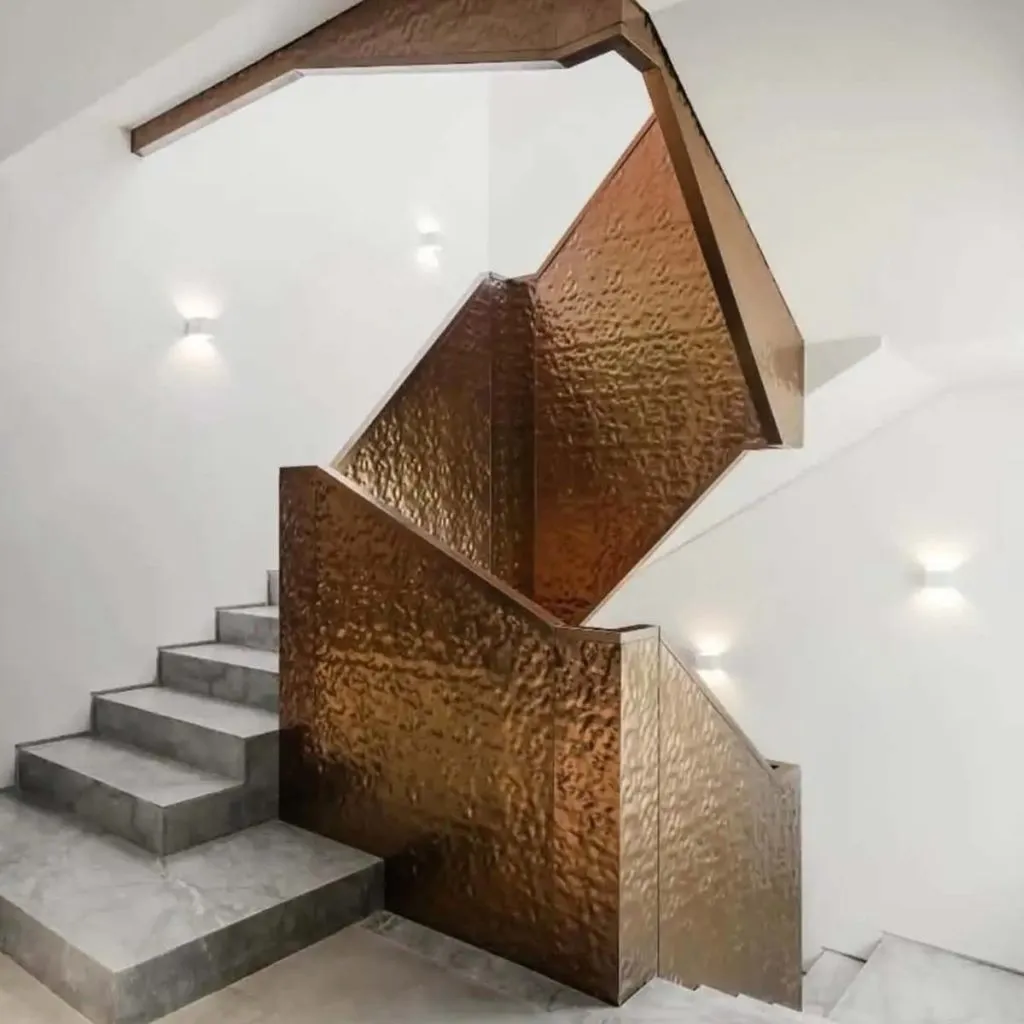
- Profiled formats add stiffness. Embossed, perforated or corrugated geometry spreads wind and impact loads across the panel instead of concentrating them at the fixings, so profiled copper ceiling panels can carry a wider span than the same gauge left flat.
- It fabricates with ordinary tools. Copper cuts, folds and bends without special equipment and takes embossing and perforation cleanly, so a workshop can produce curved panels, folded trims and patterned screens from one delivery of flat stock.
- Heat and current pass through it easily. Conductivity is higher than in most architectural metals, which helps where a panel sits against a warm surface or close to equipment and cabling and you would rather not trap heat behind it — it is also why the same metal appears in electrical components.
- Malleability buys tolerance on site. A sheet can be dressed into a reveal or around a corner instead of being re-cut, which often saves the last panel of a run.
- The material stays in the loop. Pure copper is recyclable with no loss of value, and offcuts return to the metal stream — worth noting on projects that report recycled content and construction waste.
Surface Finishes & Patina
Every order of wholesale copper sheets leaves the finishing stage in one of four surfaces, and the choice is less about colour than about how much movement the interior can accept. Natural and brushed stay on the bright side of copper; patina and oxidized deliberately start where a roof would be after years of weather.
Natural
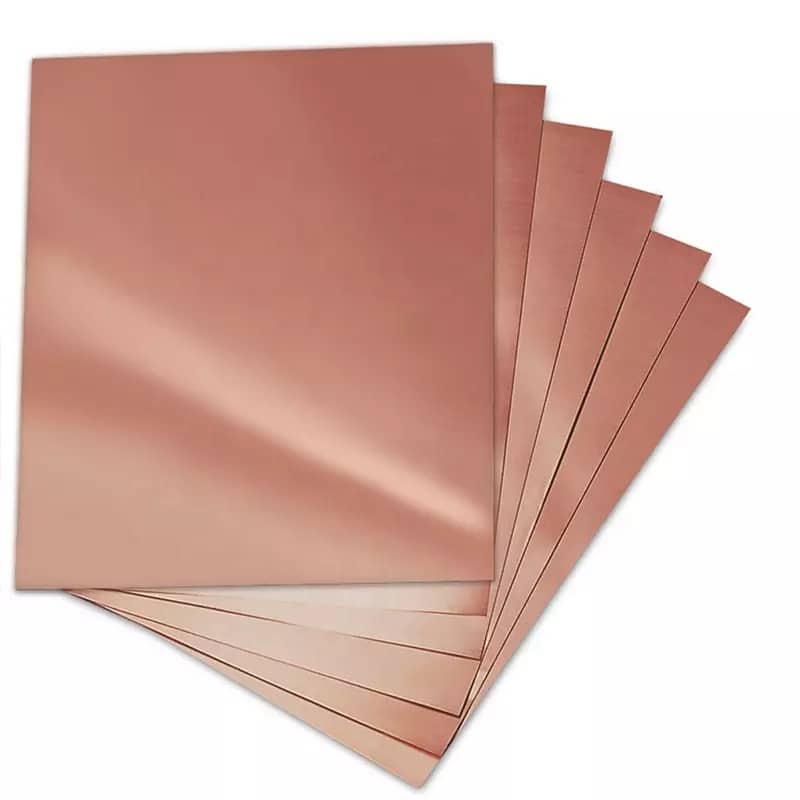
The mill finish, cleaned and left bare. It carries the full copper colour and the highest reflectivity of the four, which suits a feature wall or a bar front where the metal is meant to glow. It also marks most readily and will tone down as it oxidises, so it belongs where the client welcomes that change.
Brushed
A fine directional grain worked into the surface. A brushed copper sheet softens reflections and hides fingerprints and light scuffs along long wall runs, which is why it is the usual choice for corridors, lift lobbies and other places people touch. Keep the grain running the same way on adjacent panels; a change of direction reads as a change of tone under raking light.
Patina
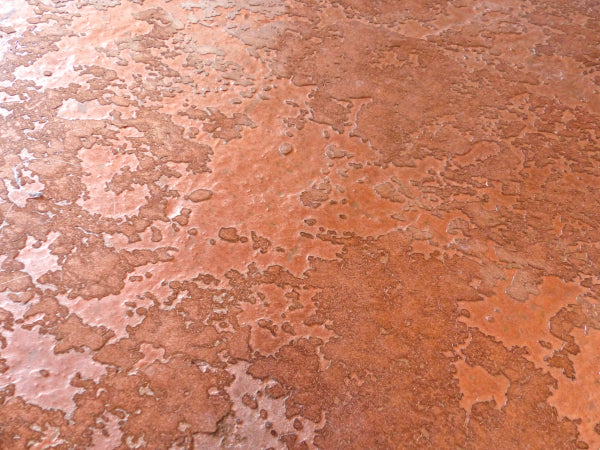
A patina copper sheet is chemically aged before it leaves the finishing stage: orange and rust move against dark brown in a mottled, irregular surface, closer to a weathered roof than to a new panel. Colour produced this way runs through the metal rather than sitting on top of it, so a folded edge keeps its tone instead of exposing a bright core the way a printed or coated face can.
Oxidized
The darkest of the four. Oxidized sheets are taken down to a deep brown-black that suits moodier interiors, dark joinery, bar backs and furniture where the metal should recede rather than shine.
Sealing and day-to-day care
If a brighter tone has to hold, ask for the optional sealing; a sealed surface slows the change without freezing it. Left unsealed, the surface keeps moving — some projects want exactly that, others need a predictable tone for a photographed handover. Clean with a soft dry cloth and a mild neutral soap if needed; abrasive pads and acidic cleaners cut through the oxide layer and leave a patch that has to even out on its own. Handle toned panels as finished surfaces rather than as raw material, with clean gloves and no stacking face to face.
Interior Applications
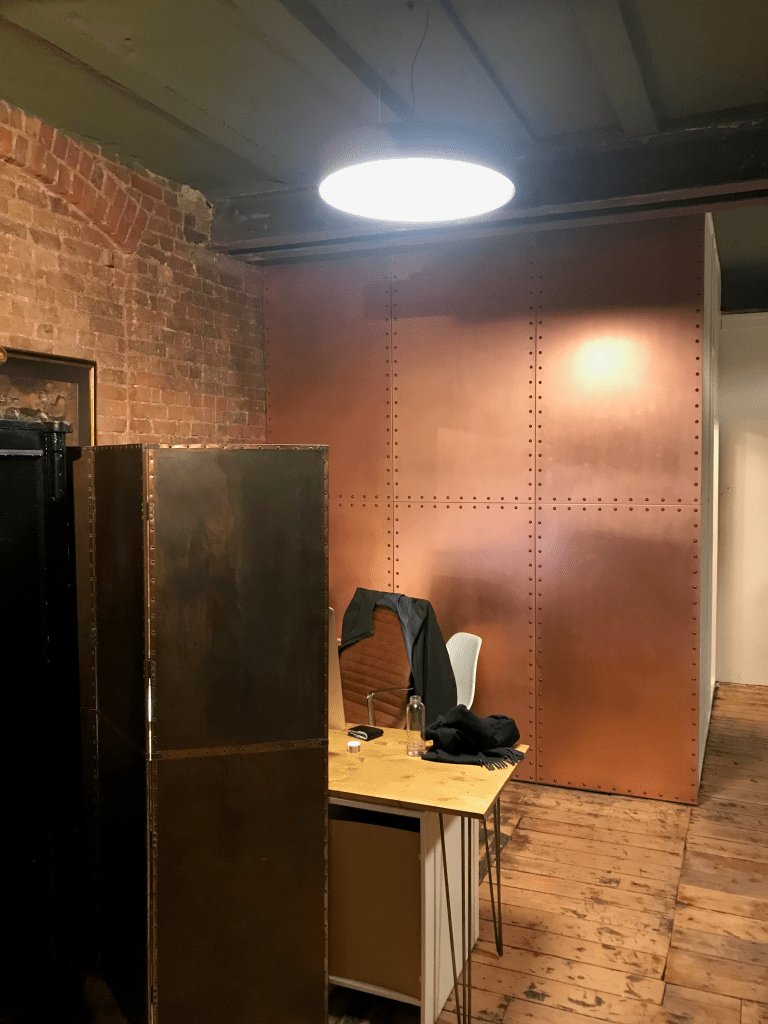
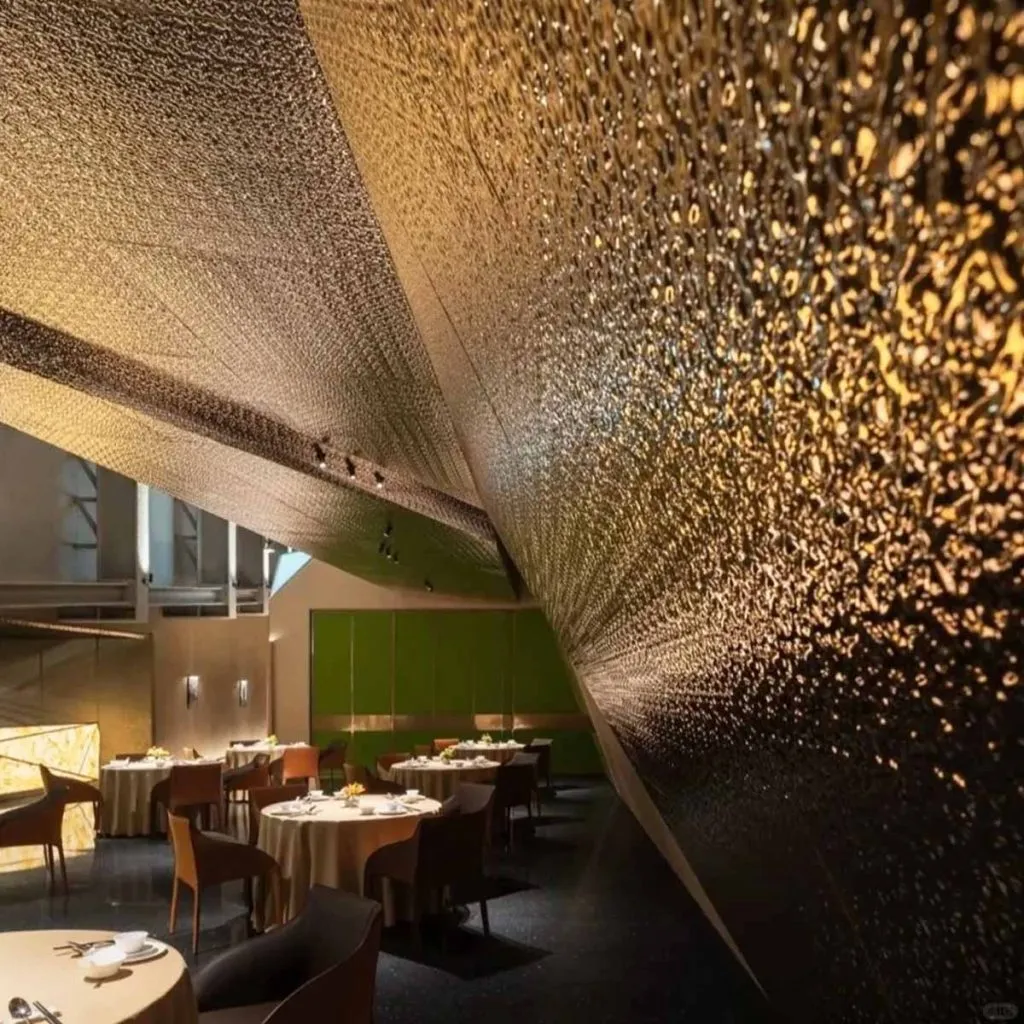
- Hotel reception and lobby walls. The first surface a guest touches and the one photographed most. Copper wall panels handle that attention well, and the finish decision is really a question of whether the operator wants to watch the metal settle or wants it to arrive already aged.
- Bar fronts and back-bar joinery. Warm metal against dark timber, often with a hand-height rail that will be touched every night. A patina copper sheet used here reads as an established surface from opening night, and the mottled tone hides the marks that a bright finish would collect.
- Ceilings, rafts and soffits. Overhead fields benefit from the sheet's light weight and from profiled formats, which keep wide panels flat across a span without doubling the substrate.
- Lift lobbies and column cladding. Long, narrow panels that have to line up. Specify the same finish and the same grain or surface direction across the whole run so adjacent panels read as one surface.
- Commercial and restaurant feature walls. Frequently specified alongside decorative metal sheets in brass or stainless within the same room, where copper supplies the warmth and the other metals supply the cooler contrast.
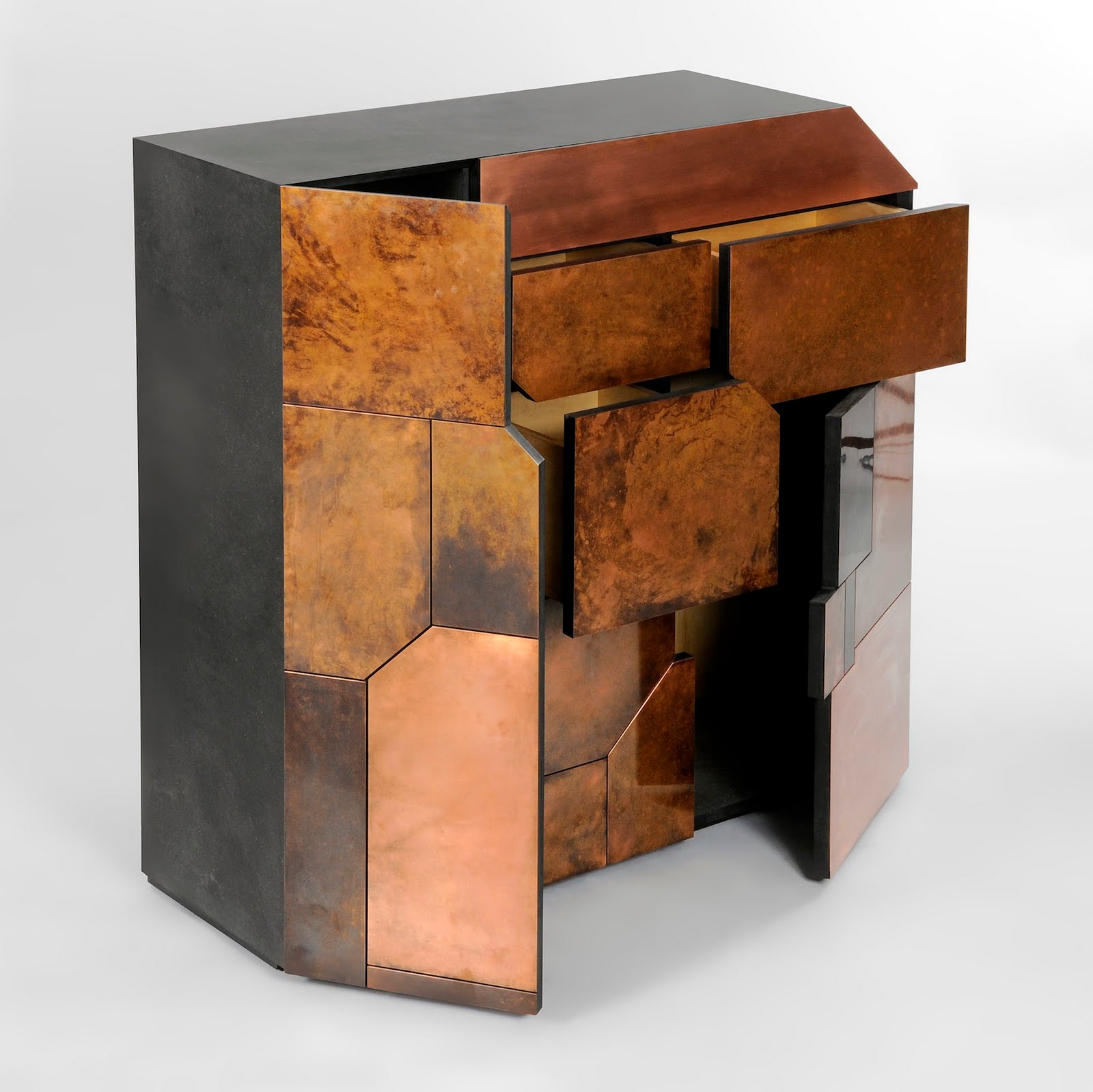
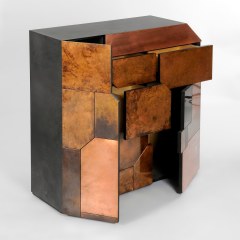
- Furniture and joinery fronts. Cabinet doors, drawer faces and bar counters take the sheet well: it folds cleanly into a return, takes a perforated or embossed pattern, and does not need an edge trim if the panel is folded rather than cut.
- Whole-floor and repeat-room packages. Where a hotel floor or a residential scheme takes wholesale copper sheets across corridors, lift lobbies and guest-room joinery, keep one finish and one surface direction for the entire package so panels from different crates still read as one installation.
Specifications
| Item | Description |
|---|
| Base material | Pure Copper |
| Standard dimensions | 1000×2000 mm, 1220×2440 mm (custom sizes available) |
| Thickness range | 0.6–2.0 mm |
| Surface finish | Natural, Brushed, Patina, Oxidized |
| Manufacturing process | Cold rolling, Embossing, Chemical patination |
| Fire rating | Class A (non-combustible) |
| Environmental rating | Recyclable, Natural material |
| Installation methods | Adhesive bonding, Mechanical fixing |
| Maintenance | Optional sealing to control oxidation |
| Typical applications | Decorative walls, Ceilings, Luxury interiors |
Fabrication & Installation
- Check the delivery against the cutting list. Sheets cut at the copper sheets manufacturer to your drawing should need only minor adjustment; mark any panel that has to be trimmed before it goes up, and set aside the sheets reserved for the most visible positions.
- Keep the visible face protected. Leave the protective film in place until the panel is fixed, drill and cut from the back wherever the detail allows, and never slide panels face to face. A brushed copper sheet marks easily when two faces are dragged across each other, so stack with a soft interleave.
- Prepare the substrate. It needs to be flat, dry, clean and sealed where moisture could reach the back of the sheet; a high spot in the wall shows through a thin gauge as a ripple across the finished face.
- Choose the fixing. Adhesive bonding suits flat wall and furniture panels and leaves no visible fasteners. Mechanical fixing suits panels that must come off again for service access, panels that carry their own weight, or runs built on a subframe.
- Set out joints before the first panel goes up. Mark the grid, decide where movement gaps fall and keep joint widths even. Resetting a run after it is complete costs far more than a mid-run check.
- Hang ceilings in a fixed sequence. Copper ceiling panels need support on both axes and a sequence that keeps the grid true; check the plane with a straight edge every few panels rather than at the end of the field.
- Hand over clean. Remove the film, wipe with a soft dry cloth, and leave the project a note of which face was designated visible — something worth agreeing with your copper sheet supplier before the sheets are packed, so a replacement panel later matches the rest of the run.
Custom Sizing & Ordering
- Send the setting-out drawings first. Panel sizes, joint positions, openings for sockets, signage and fixings, and the direction the face should run all belong on the drawing. Sheets cut to that information need far less on-site trimming, and for copper wall panels the cutting list matters more than the nominal sheet size.
- Fix the gauge against the fixing detail. Lighter gauges suit large flat fields and ceilings, where the weight sitting on the substrate matters; heavier gauges suit panels at hand height that take knocks and trolley traffic. Confirm the choice together with the substrate, adhesive or subframe you plan to use.
- Approve the finish reference before release. Check the tone in daylight and again under the lighting of the room it is going into, then keep the approved reference with the order so the batch can be matched to it.
- Decide where custom sizing pays. Standard sheets cover most wall and ceiling work; a copper sheet supplier earns a custom order where a run has to land on a structural line, wrap a column, or fit an existing opening without a visible trimmed edge.
- Confirm the commercial and delivery details. Lead time, payment terms, packing and freight route are agreed per project, and export documentation is prepared against your programme. Confirm the current schedule and terms with your sales contact before the order is released.
- Release to production. Once sizes and finish are agreed, the instruction goes to the copper sheets manufacturer and stays with the batch through rolling, finishing, cutting and packing.
- Collect the documents with the order. Specification sheet, approved finish reference, cutting list and packing details can be issued for the contractor's submittal; ask about sample availability early if the finish still has to be signed off.
Supply Chain & Delivery Assurance
Guangzhou Chuxin Import & Export works as the coordination point between your project and the suppliers who make it. We consolidate the categories a fit-out needs into a single order, match each specification to suppliers in our global procurement network, and follow it through sampling, pre-shipment inspection, export documentation and cross-border delivery to the Americas, Europe, Southeast Asia and the Middle East. Custom sizing and OEM coordination are arranged around your drawings and programme, and one contact tracks the order from approved sample to arrival, so a multi-category package moves on one schedule.
FAQ
Which finish should I choose for a wall that gets touched every day?
For corridors, lift lobbies, door pushes and bar fronts, a brushed copper sheet is the practical choice: the directional grain breaks up reflections and masks fingerprints and light scuffs far better than a bare natural face. Natural suits feature walls that are looked at rather than handled. Patina and oxidized work wherever the aged look is wanted from day one, because the tone is already established at the finishing stage.
Can I order sizes or thicknesses outside the standard sheets?
Yes. Beyond the standard sheets, panels are cut to your dimensions and intermediate thicknesses are rolled within the same band, so a run can land on a structural line or fit an existing opening without a visible trimmed edge. The cutting list is what production works from, so include openings, joint positions and the visible-face direction as well as panel sizes.
How does a patina copper sheet behave after installation?
The aged look is set chemically at the finishing stage, not printed on, so it does not wear off a folded edge or a corner. The surface still responds slowly to air and touch — more quickly unsealed, more slowly with the optional sealing. Areas that get handled, such as a door push or a bar edge, will develop their own sheen; that is normal for a living finish, and it is why the reference should be approved under the lighting of the actual room.
Should the panels be glued or mechanically fixed?
Both methods work, and the choice follows the detail rather than the material. Adhesive bonding gives a flat, fastener-free face on walls, joinery and furniture panels. Mechanical fixing suits panels that must be removable for service access, panels carrying their own weight, or runs built on a subframe. Tell us which route you plan to take when you order, so the gauge and the flatness of the panel suit it.
Can copper wall panels be used outside as well as indoors?
Yes. Copper has a long history on roofs and exterior elements, and its oxide layer is what protects it there. Outdoors the surface weathers faster and less evenly than indoors, so exterior runs are usually specified in patina or oxidized when a stable aged look is wanted from the start, and in natural when the client wants to watch it change. Exterior details also need movement gaps and a substrate that keeps water off the back of the sheet.
Do copper ceiling panels need different handling from wall panels?
They do. Panels overhead carry their own weight against the substrate, so support on both axes and a fixing sequence that keeps the grid true matter more than they do on a wall. Profiled formats — embossed, perforated or corrugated — add stiffness, which is why they are common where a ceiling field spans further than a flat sheet comfortably would. Check the plane with a straight edge as the field goes up, not at the end.
Can copper sit in the same scheme as other decorative metal sheets?
Yes, and it is often the warm counterpoint to stainless, aluminium or brass in one interior. Keep in mind that each metal ages on its own terms: copper keeps moving, while a coated sheet holds its tone. Approve the metals side by side under the project's lighting, and decide which surfaces are allowed to change and which must stay fixed before the specification is signed off.